About the programme
Understanding the Compendium of Tantras
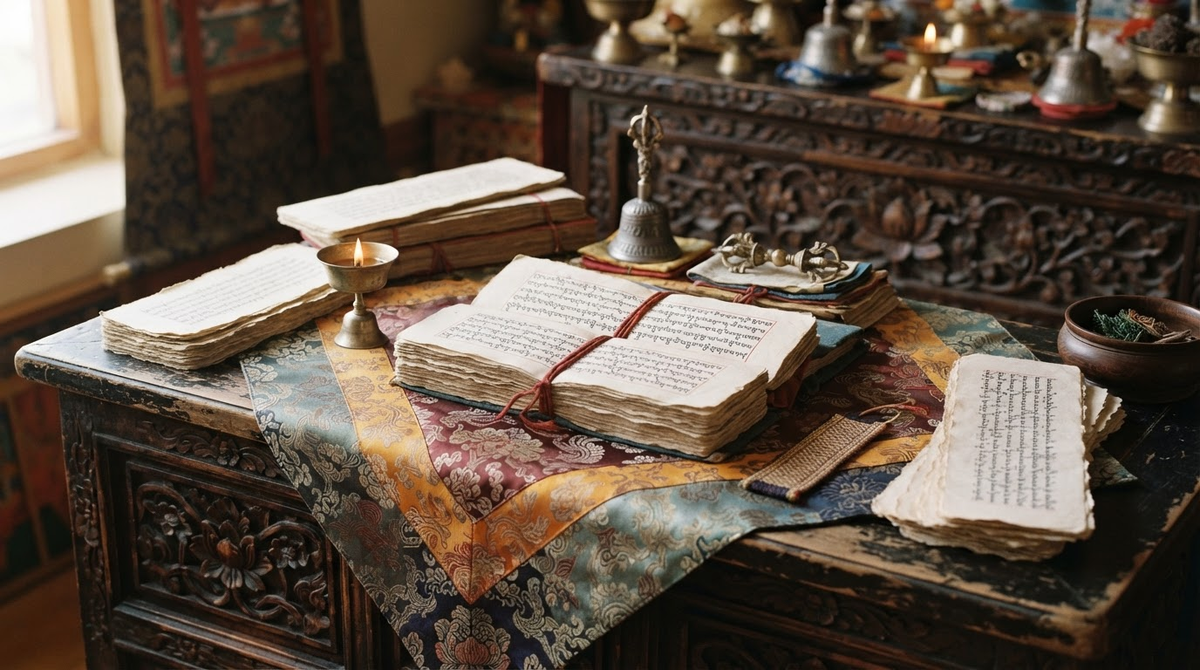
The Compendium of Tantras (Tib. རྒྱུད་སྡེ་ཀུན་བཏུས་, Wylie: rgyud sde kun btus) is a vast, non-sectarian collection of Vajrayāna Buddhist teachings, empowerments, and lineages assembled in 19th-century Tibet. It was initially compiled by Jamyang Khyentse Wangpo, beginning in the 1840s, and eventually completed by his disciple Jamyang Loter Wangpo. It draws together teachings from across the historic schools of Tibetan Buddhism, including 315 empowerments and 25 commentaries spanning the Sakya, Gelug, Kagyu, Nyingma, Bodong, Dolpa, Jonang, Shyijé, Orgyen Nyengyü, and Kalachakra traditions. It is organized by the four classes of tantra (kriya, charya, yoga, and anuttarayoga). Its significance is preservational as much as devotional: for traditions like Bodong, Dolpa, and Ogyen Nyengyü, the Compendium's preservation kept otherwise-vanishing teachings from extinction. It stands alongside Jamgön Kongtrul's Five Great Treasuries as a landmark of the 19th-century Rimé (non-sectarian) movement in eastern Tibet.
For general patrons, an empowerment can be understood as a formal transmission and blessing through which a qualified teacher introduces a practice, its symbolism, and the commitments connected with it. Oral transmissions carry the words and reading lineages of texts and practices. Together, empowerments and oral transmissions create a living setting for hearing, receiving, and respectfully engaging with Buddhist teachings. The schedule note about oral transmissions recognises that this programme includes more than the named empowerment ceremonies.
The listed practices include themes familiar in Vajrayana practice, such as compassion, protection, healing, longevity, purification, and the removal of obstacles. Each named mandala and deity practice has its own place within the programme, while the full sequence reflects the breadth suggested by the Compendium of Tantras. The days are offered for those attending in person and for patrons who wish to learn about or support the programme. Please receive this schedule as an informational guide and follow the instructions of the attending teachers and organisers for participation.